
Design and Ethics
Why the Player Becomes a Teenage Red Guard
Choosing the player's point of view was the most important and difficult decision in the project.
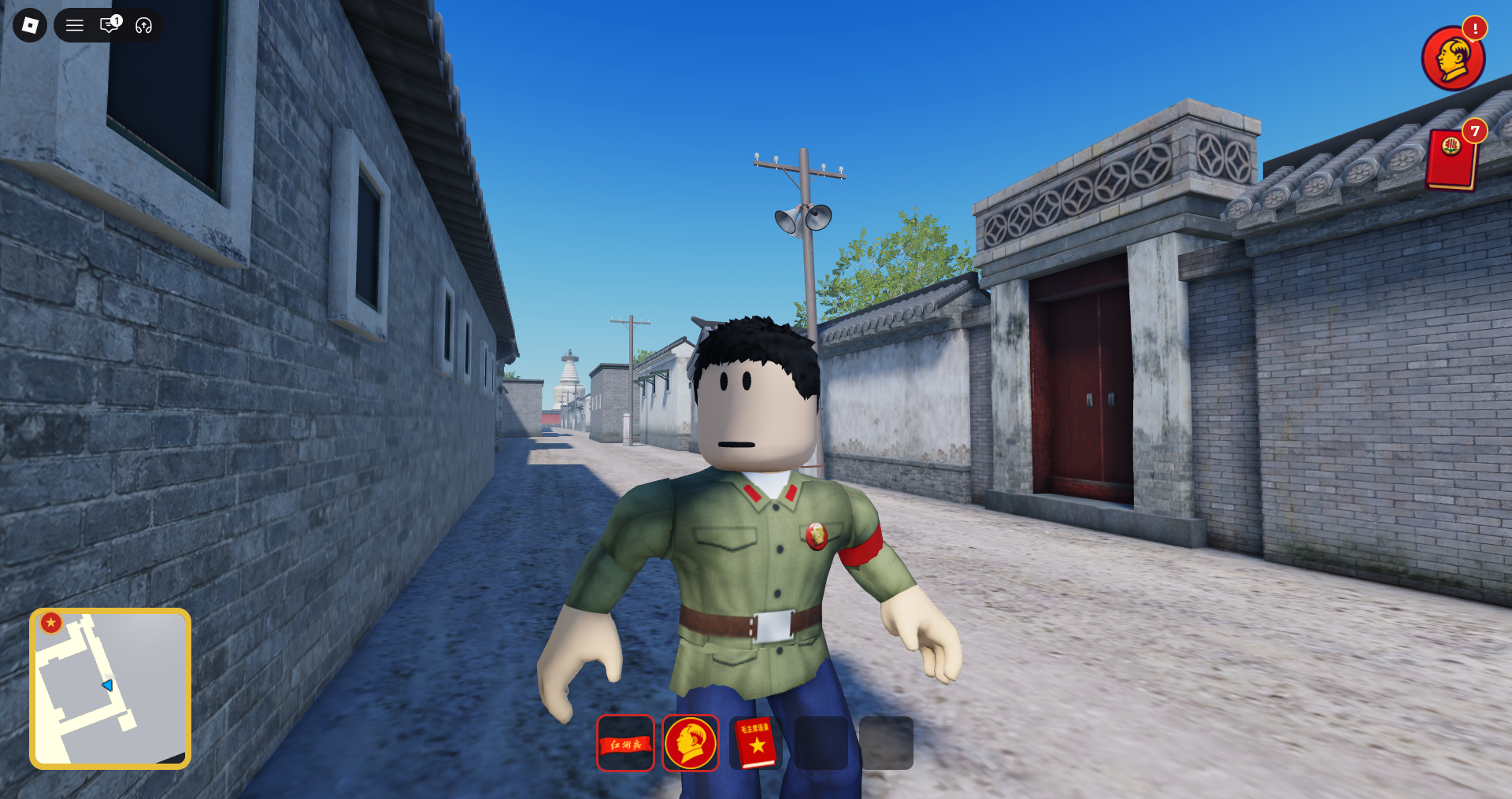
The most difficult question in designing One Afternoon in Red August 1966 was not technical. It was ethical: whose perspective should the player inhabit?
Many games about war, persecution, or political violence place the player in the role of a victim, rescuer, or resistance figure. That approach gives the player a clear moral position. Our project takes a more uncomfortable path. The player becomes a teenage Red Guard during the opening phase of the Cultural Revolution.
We chose this perspective because young people were central participants in the events we are studying. Red Guards were often middle school and high school students. They were influenced by political propaganda, school hierarchies, peer groups, family backgrounds, and public approval from the country's highest authority. Some participated in humiliation, destruction, persecution, and violence.
Our intended audience is also made up of teenagers. Experiencing the story through someone close to their own age may help players move beyond the assumption that historical wrongdoing belongs only to obviously evil or fundamentally different people. It raises a harder question: how could ordinary students become involved in harmful collective action?
That perspective creates serious design responsibilities. Player participation must never turn persecution into entertainment or make destructive behavior feel admirable. Historical context must appear before, during, and after the player's actions. The people harmed by those actions cannot exist merely as props. The experience also needs opportunities for reflection so that completing a mission does not become the same thing as endorsing it.
We are approaching these responsibilities through several design principles. History comes before spectacle. Missions connect actions to real social and political conditions. Interactive objects and journal entries provide additional context. Educator and historical review will help us identify misleading details, missing perspectives, and moments where gameplay could send the wrong message.
We also want the game to show pressure without removing responsibility. Propaganda, conformity, and authority help explain behavior, but explanation does not erase the consequences of an individual's choices. This tension sits at the center of the project.
We do not yet claim to have solved every ethical challenge. The prototype gives us a way to test our assumptions with students, teachers, historians, and people who experienced the period. Their responses will shape the writing, mission design, reflection activities, and boundaries of what the player can do.
Interactive history can ask questions that a textbook cannot ask in quite the same way. What would you notice? What would you accept? When would you hesitate? What social pressures would influence you? By confronting those questions through the perspective of a teenage participant, we hope students will reflect on both the Cultural Revolution and the broader human capacity for conformity, courage, and moral choice.