Historical Research
Reconstructing a Beijing Neighborhood from 1966
Creating a believable historical setting requires more than old architecture. Everyday details make the vanished world understandable.
One Afternoon in Red August 1966 takes place within a Beijing neighborhood during the Cultural Revolution. Building that setting has required us to answer hundreds of small questions: what did an alley look like, what hung on a family's wall, what objects sat on a desk, and how did political messages enter everyday spaces?
Our goal is not to reproduce Beijing building by building. That would exceed the scope of our current team, and much of the city has changed dramatically. Instead, we are creating a historically grounded environment that brings together recognizable features of Beijing in the 1960s.
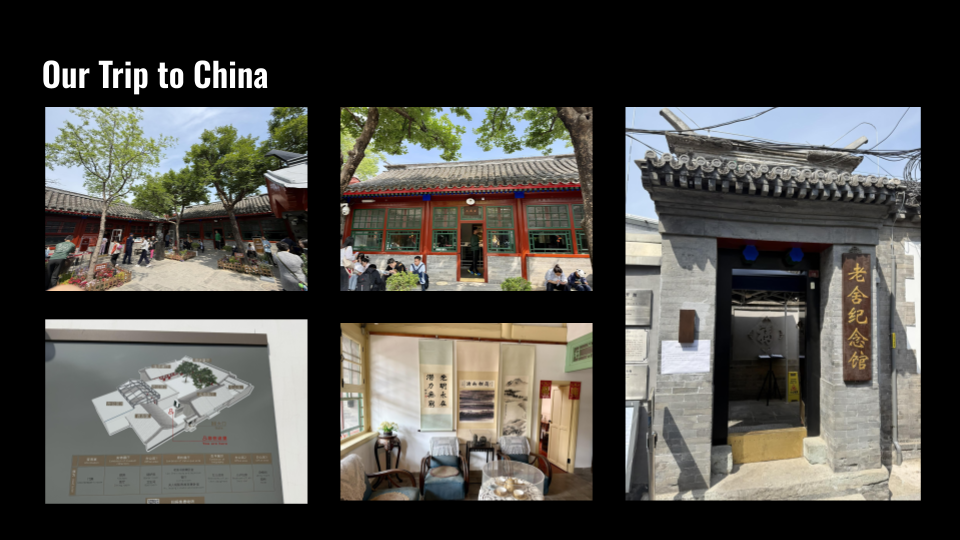
Our research began with the physical city. Team members traveled to Beijing and photographed hutongs, traditional courtyard houses, gates, rooflines, interior spaces, and neighborhood details. These visits helped us understand scale and spatial relationships. They also revealed the limits of present-day reference material. Many older buildings have disappeared, while surviving structures have often been renovated.
Historical photographs and film footage therefore became essential. They help us study unpaved roads, utility poles, loudspeakers, storefronts, wall slogans, clothing, furniture, and the density of handwritten big-character posters. A single photograph may answer one question while raising several more, so we compare references rather than treating one image as a complete record.
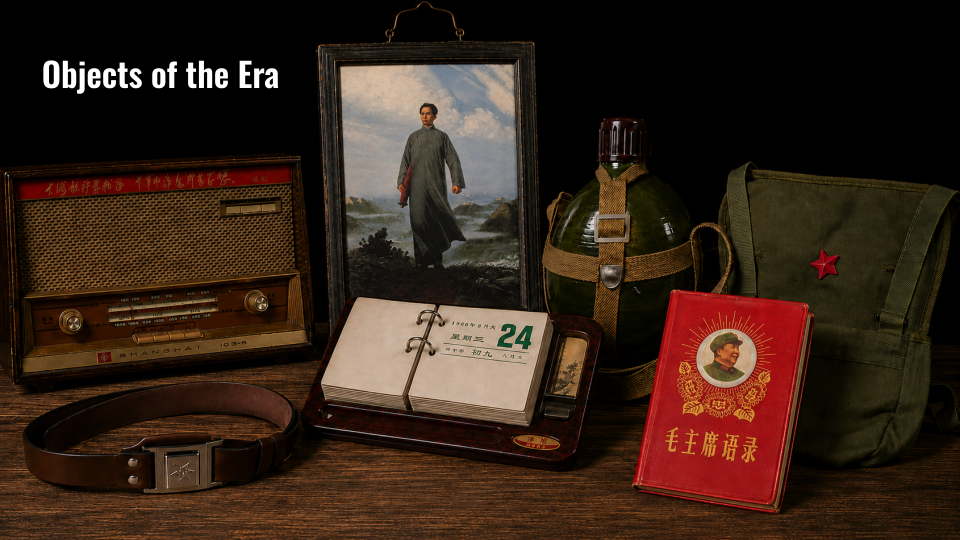
Everyday objects matter just as much as architecture. Radios, thermos bottles, calendars, school bags, books, paintings, calligraphy, vases, and household furniture help establish how people lived. Some of these objects later become interactive. A player can examine them, learn why they mattered, and understand why campaigns against the Four Olds targeted both material culture and personal memory.
The first prototype includes narrow alleys, two courtyard homes, building interiors, and a collection of historically inspired artifacts and propaganda materials. These spaces support the early missions, including obtaining a Red Guard armband and participating in the campaign to destroy old ideas, culture, customs, and habits.
Historical reconstruction also requires restraint. A visually convincing object can still be misleading if it appears in the wrong year, social setting, or political context. We are building a process in which research, environmental design, and historical review inform one another. When evidence remains uncertain, we should acknowledge that uncertainty rather than present invention as fact.
This work has value beyond scenery. Digital reconstruction can preserve a sense of place that no longer exists in the same form. It gives students a spatial understanding of history: how public propaganda entered private neighborhoods, how homes opened onto communal alleys, and how political activity moved through ordinary daily life.
As we expand the prototype, we will continue adding environmental detail, interactive objects, and better documentation for our sources. The setting should do more than look historical. It should help players ask better questions about the people who lived there.