Development
How the Prototype Turns History into Interaction
The prototype combines historical reconstruction, mission-based interaction, and reflection in one learning experience.
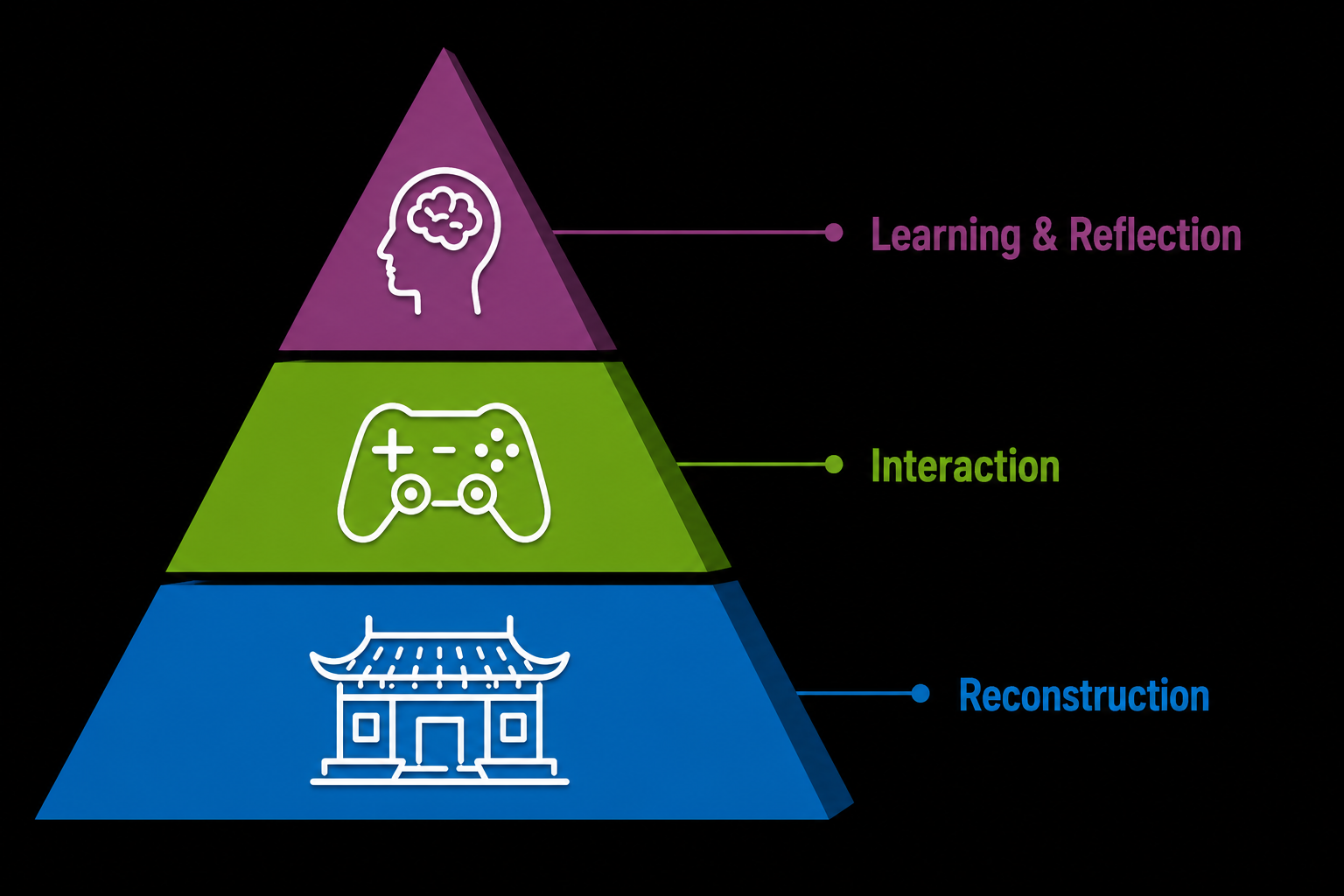
Our prototype uses three connected layers: reconstruction, interaction, and learning and reflection. Each layer serves a different purpose, but the educational experience depends on all three working together.
The reconstruction layer establishes the world. Players enter a historically researched Beijing neighborhood with alleys, courtyard houses, interiors, propaganda materials, and everyday objects. The setting gives abstract historical information a physical location. Political campaigns unfold where people live, study, and encounter their neighbors.
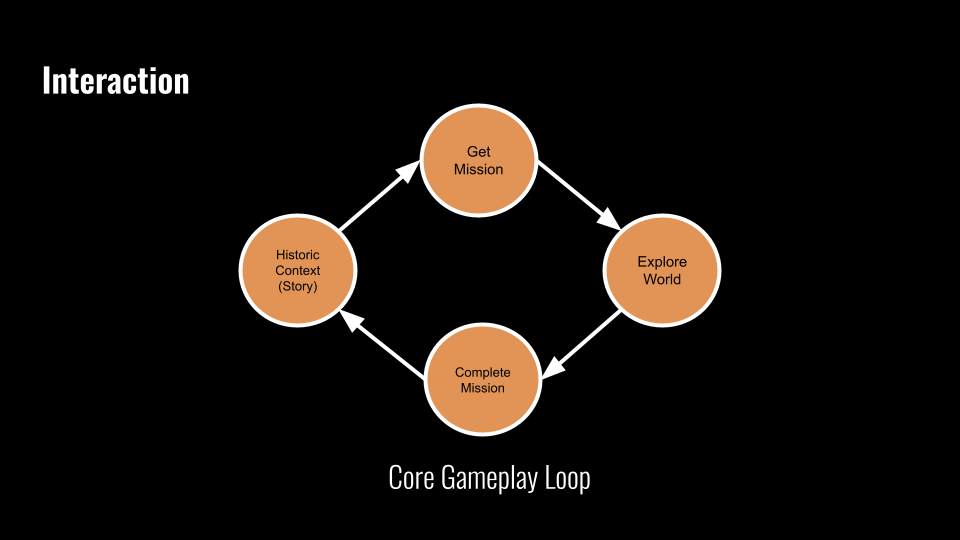
The interaction layer draws from open-world game design. A story segment provides context and introduces a mission. The player then explores the environment, interacts with characters or objects, and completes objectives. Finishing a mission advances the story and introduces the next part of the afternoon.
The first playable build includes two missions. The introductory mission establishes the player's role as a young revolutionary and asks the player to obtain a Red Guard armband. The second mission introduces the campaign to destroy the Four Olds. The player enters the residence of a writer and encounters antiques, traditional art, calligraphy, and household possessions as targets of revolutionary destruction.
Interaction alone would not provide enough context. The third layer supports learning and reflection. Interactive objects explain their historical significance, while a digital journal records discoveries and gradually assembles a broader picture of the period. A propaganda poster, for example, can become an entry point for understanding its imagery, political purpose, and intended audience.
We chose Roblox for the initial prototype because it allows a small team to build and test a 3D experience quickly. It is also familiar to many teenagers, including young people who create their own experiences on the platform. At this stage, Roblox functions as a laboratory where we can test mission structure, navigation, usability, tone, and student response before committing to a much larger production.
The prototype is intentionally limited. Streets still need more people and activity. Character dialogue, environmental behavior, additional historical context, and later missions remain under development. We expect playtesting to reveal features that should be revised or removed.
Our development approach begins with research, followed by a small prototype, testing, and iteration. Difficult history introduces too many unanswered questions for us to design the entire experience in isolation. A playable build lets us observe where students become confused, what they notice, and whether gameplay supports or distracts from historical understanding.
The long-term goal is a richer and more immersive experience, potentially extending beyond Roblox to a standalone PC release. For now, the prototype gives us something more valuable than a polished promise: a working model that students and educators can experience, question, and help us improve.