Looking Ahead
From Roblox Prototype to Classroom and Museum Experience
Short, self-contained missions could allow the project to reach students through classrooms, museums, and a future standalone release.
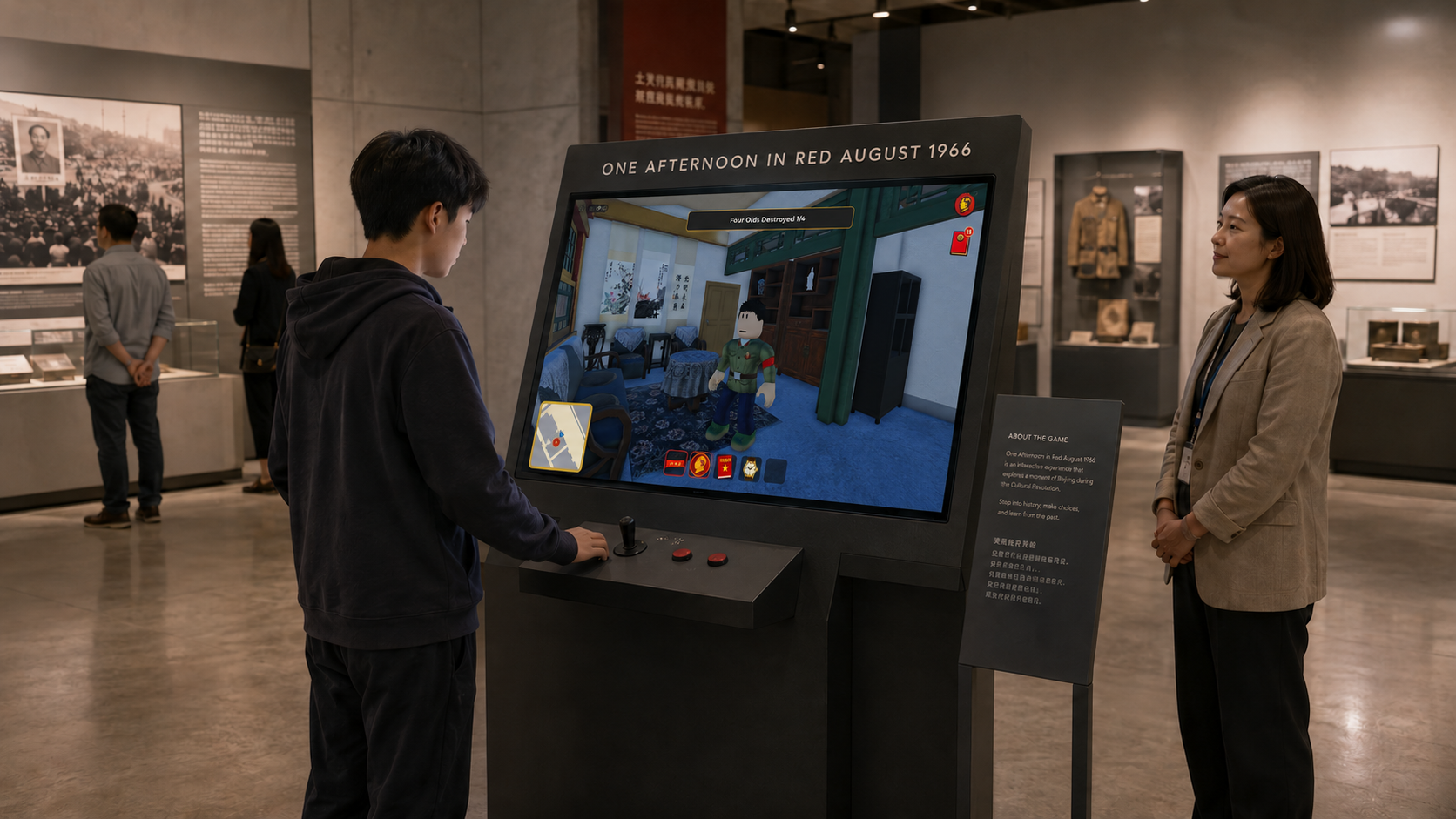
One Afternoon in Red August 1966 began as a Roblox prototype, but the project's mission extends beyond any single platform. We are now exploring how its short, self-contained missions could support learning in classrooms, museums, and other facilitated settings.
A large open-world game can require many hours, which makes it difficult to use during a normal class period or museum visit. Our mission structure offers a possible solution. Each chapter can introduce a focused historical situation, allow a brief period of guided interaction, and conclude with context and reflection.
In a classroom, a teacher might use one mission before a conventional lesson to spark questions. The same mission could also follow readings, primary sources, or a lecture and give students a setting in which to apply what they learned. A teacher-led discussion would help students examine the protagonist's actions, the social pressures shown in the experience, and the perspectives that the mission could not fully represent.
For museums, we are considering a shorter kiosk experience of approximately ten minutes. A visitor could receive a concise historical introduction, complete a guided interaction, see its consequences, and respond to a reflection prompt. A facilitator or adjoining exhibit material could connect the digital experience to testimony, artifacts, photographs, and primary sources.
A museum adaptation would require more than placing the existing game on a public computer. The interface would need to accommodate first-time visitors, short visits, accessibility needs, durable hardware, and a wide range of ages. The content would also need institutional review to ensure that the treatment of traumatic history fits the museum's educational and ethical standards.
We are seeking educators, historians, museums, and research organizations that can help us evaluate these possibilities responsibly. Their involvement can strengthen historical accuracy, instructional design, assessment, accessibility, and the representation of people harmed during the Cultural Revolution.
The longer-term vision includes a richer standalone PC experience. Before expanding the world, however, we need to validate the core approach. Can a short interactive mission improve understanding when paired with contextual material and discussion? Which design choices encourage reflection, and which create misconceptions? What support do teachers and facilitators need?
Funding and partnerships will shape how quickly we can answer those questions. Building an immersive historical environment requires sustained research, writing, art, programming, testing, and educational evaluation. HistoryQuest is exploring public and private grants, research partnerships, and museum collaboration while maintaining its commitment to accessible student learning.
Our immediate priorities remain focused: improve the current missions, conduct more playtests, build educator materials, and develop a credible research plan. Each setting may eventually require a different version of the experience, but all versions should serve the same purpose: helping young people understand how history was lived and encouraging them to reflect on the choices people made.